
Could a brake warning light mean anything from an engaged parking brake to a problem that makes driving unsafe? If you’re searching “brake warning light Utica,” it’s understandable to wonder whether you can drive to a shop or should stop and arrange a tow. The light is a safety signal, not a diagnosis. Its color, symbol, and any changes in braking feel all matter.
This guide explains how the main brake, ABS, and parking-brake indicators differ, which signs call for stopping rather than continuing your trip, and what you can safely check while the vehicle is parked. A red brake warning that stays on after you’ve released the parking brake warrants caution, especially if the pedal feels different, braking is reduced, or you notice a leak.
We’ll also explain when a professional inspection is the dependable next step. BLACKCAT AUTO is a family-owned shop serving drivers in Utica, Rome, and Boonville, with brake-system inspections and service. An assessment can help identify the cause and explain any recommended repairs, without guessing from the warning light alone.
Key Takeaways
- For a brake warning light, Utica drivers should check the symbol and consult the owner’s manual, since indicators can mean different things across vehicles.
- If braking feels reduced or the pedal changes, pull over safely and arrange help rather than continuing to drive.
- While parked in a safe place, look for obvious fluid leaks and note unusual sounds or changes in how the brakes feel.
- Record when the light appeared and whether it stays on. These details can help a technician assess the issue.
- A professional brake inspection can identify the cause before repair needs are discussed, rather than treating the warning light as a diagnosis.
Brake Warning Light in Utica: What the Signal Means for Your Safety
A brake warning indicator signals that a brake-related system needs attention, but the symbol alone doesn’t confirm what’s wrong. Its meaning can depend on the vehicle, the exact icon, and what you notice while braking. A dashboard warning light alerts you to a system condition. It doesn’t identify a failed part or tell you which repair is needed.
A brake warning light Utica motorists notice may point to something simple, such as the parking brake being engaged, or signal a brake-system concern that needs prompt assessment. Check your vehicle’s owner’s manual for the indicator’s meaning and instructions. Then note whether the light changes after you release the parking brake and whether braking feels normal.
What does the red brake warning light usually indicate?
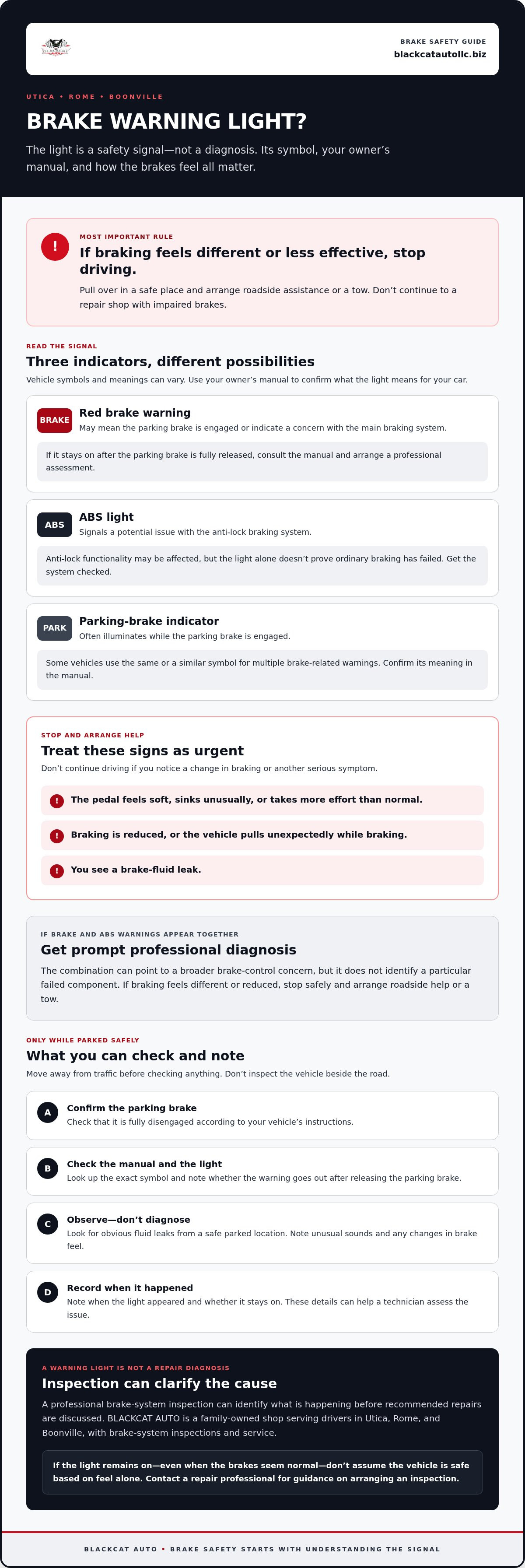
A red brake symbol, often an exclamation point inside a circle, commonly relates to the parking brake or the main braking system. The design and meaning can vary by vehicle, so use the manual rather than relying on the icon alone. If the indicator goes out when you fully release the parking brake, note that behavior. If it stays on, don’t dismiss it. Arrange a professional assessment, especially if anything about braking has changed.
When is a brake warning light urgent?
Pay close attention to the brake pedal and how the vehicle responds. A pedal that feels soft, sinks unusually, or takes more effort than normal to press can signal a serious concern. Reduced braking, visible fluid leakage, or the vehicle pulling unexpectedly while braking are also reasons to stop driving. Don’t continue to a repair shop if the brakes feel impaired.
If braking feels different or less effective, pull over in a safe place and seek roadside assistance or a tow rather than driving on. Move away from traffic before checking anything, and don’t attempt an inspection beside the road. If the light remains on but the brakes seem normal, don’t assume the vehicle is safe based on feel alone. Contact a repair professional for guidance on arranging an inspection. A careful assessment can establish the cause before anyone discusses a specific repair.
Brake, ABS, and Parking-Brake Lights: How to Tell Them Apart
Brake-related indicators can look similar, but they don’t always point to the same system. The color, icon, and vehicle-specific instructions matter. Use this comparison as a starting point, then check your owner’s manual for the exact meaning of the lights in your car. For an additional overview, CarParts.com explains the different brake warning lights and their common interpretations.
| Indicator | Typical meaning | What to keep in mind |
|---|---|---|
| Red brake warning | May indicate an engaged parking brake or a concern with the main braking system. | If it stays on after the parking brake is fully released, consult the manual and arrange an inspection. |
| ABS light | Signals a potential issue with the anti-lock braking system. | Anti-lock functionality may be affected, but the light alone doesn’t prove that ordinary braking has failed. Get the system checked. |
| Parking-brake indicator | Often illuminates while the parking brake is engaged. | Some vehicles use the same or a similar symbol for more than one brake-related warning, so confirm its meaning in the manual. |
Dashboard lights identify a system concern, not its exact cause. A brake warning light Utica drivers see should be interpreted alongside the manual and any changes in how the vehicle responds. Don’t assume a specific part has failed based on an icon alone.
What does it mean when the brake and ABS lights appear together?
Two warnings at once can point to a broader brake-control concern and call for prompt professional diagnosis. The combination doesn’t identify a particular failed component. A technician needs to assess the vehicle to determine what’s happening. If braking feels different or reduced, or another serious symptom appears, stop in a safe place and don’t continue driving. Arrange roadside help or a tow.
Can the parking-brake light stay on after release?
While safely parked, confirm that the parking brake is fully disengaged according to your vehicle’s instructions. If the indicator remains illuminated, consult the owner’s manual and arrange an inspection rather than repeatedly resetting systems or ignoring the warning. A professional brake assessment can clarify whether the indicator reflects a simple status or a concern that needs attention.
If a persistent indicator needs follow-up, consider arranging a brake-system inspection to have the warning assessed and the findings explained before repair needs are discussed.
Can You Drive With a Brake Warning Light in Utica?
There isn’t one safe answer for every vehicle. The right next step depends on which warning is lit, how the brakes feel, and whether you notice other signs of trouble. A normal-feeling pedal doesn’t rule out a brake-system problem, so don’t treat the absence of symptoms as proof that it’s safe to keep driving.
For drivers in Utica, Rome, and Boonville, winter road conditions add context, not a diagnosis. Road salt and winter conditions can affect vehicle components, but they don’t confirm the cause of a warning light. Base your decision on the warning and the vehicle’s behavior, then have the system assessed rather than guessing.
Symptoms that mean you should stop driving
If the vehicle isn’t braking as expected, prioritize getting out of traffic safely. A pedal that sinks, visible fluid, smoke, or severe grinding are urgent signs, as is any clear loss of braking control.
- Switch on your hazard lights and move to a safe location if you can do so without putting yourself or others at risk.
- Once safely stopped, don’t inspect the vehicle beside moving traffic.
- Call for roadside assistance or a tow rather than testing the brakes on the road or trying to reach a shop under your own power.
Stopping in a safe place is the priority. If the vehicle can’t be moved safely, stay clear of traffic and seek appropriate help.
If the light is on but the brakes feel normal
In a safe, stationary location, confirm that the parking brake is fully released according to your owner’s manual. Note which symbols remain illuminated and whether the warning appeared after starting the vehicle or during a trip. Those details can help a technician understand what you observed, but they can’t confirm the cause.
Arrange a prompt brake inspection instead of waiting to see whether the light goes away. The vehicle’s condition, the warning type, and any changes in performance all matter. There’s no blanket assurance that driving is safe just because the pedal feels normal.
If you’re weighing your next step after a brake warning light Utica alert, share the warning symbols and symptoms with a repair professional before deciding whether to drive the vehicle in. A careful inspection can clarify the concern and help you make an informed plan.
What to Check Before Booking Brake Service in Utica
A few observations can help you describe a brake warning light that Utica repair professionals need to assess, but they can’t replace an inspection. Make these checks only while the vehicle is parked in a safe place. Don’t crawl underneath it or handle brake components unless you have the proper training and equipment.
Safe checks to make while the vehicle is parked
- Confirm the parking brake is released. Follow the instructions in your owner’s manual rather than forcing a lever or switch.
- Note any visible fluid. Look around the vehicle for fresh spots, but don’t touch or taste an unknown fluid, and don’t try to identify its source yourself.
- Record the warning indicators. Note whether the red brake light, ABS light, or a stability-control indicator is also illuminated. The manual can help you identify each symbol.
- Write down when the warning appeared. Record whether it came on at startup or during a trip, whether it stays lit, and any change in pedal feel, braking response, noise, vibration, or pulling.
- Gather useful context. Bring the vehicle manual, and tell the shop about recent repairs or other dashboard messages that appeared around the same time.
If you notice impaired braking, fluid leakage, smoke, or another serious symptom, don’t continue these checks. Prioritize getting to a safe place and arranging appropriate help.
What a brake inspection can help establish
A professional inspection can assess the reported warning and examine brake components to help determine what needs attention. The light alone doesn’t establish a repair, so ask which components and indicators were checked, what the inspection found, and which work is necessary. Clear answers help you understand the condition of the system and make an informed decision without guessing.
For more background, look for a brake inspection guide and information about brake service in Utica. Those resources can explain the process, while an inspection of your vehicle is what helps establish its specific needs.
If you’ve noted the warning symbol and symptoms, arrange a brake inspection to have the concern assessed and the findings explained.
Arrange a Brake Warning Light Inspection With BLACKCAT AUTO
A warning light is a reason to have the brake system assessed, not a guarantee that one particular repair is needed. BLACKCAT AUTO is a family-owned and operated automotive shop serving Utica, Rome, and Boonville, with brake-system inspections and component replacement among its services. An inspection can help move from uncertainty about the indicator to a clearer understanding of the vehicle’s condition.
What to expect from a professional brake assessment
Share which warning appeared, whether it stayed on or came and went, and any changes you noticed in braking. That context helps guide the assessment, but the light itself doesn’t establish which component, if any, needs repair. Inspection findings should guide recommendations, rather than assumptions based on a dashboard symbol.
Before approving work, ask what was inspected, what the findings mean, and which repairs are necessary. A clear explanation gives you the chance to understand the concern and consider the recommended work. If component replacement is advised, ask how the inspection results support that recommendation. The purpose is to make the next step understandable, not to promise a particular outcome before the vehicle has been assessed.
A straightforward next step for Utica-area drivers
If you’re dealing with a brake warning light Utica drivers may encounter, or braking that feels different, contact BLACKCAT AUTO to ask about arranging an inspection. When you reach out, explain the indicator and symptoms as clearly as you can. If the vehicle has serious braking symptoms, don’t drive it to the shop. Seek appropriate roadside help or towing instead.
BLACKCAT AUTO serves drivers in Utica, Rome, and Boonville. A clear description of the warning and the vehicle’s behavior can help clarify how to proceed. Contact BLACKCAT AUTO about a brake inspection.
Take the Next Step Toward Clear Answers
A warning light deserves attention, but it doesn’t identify the repair by itself. The symbol and the way your vehicle brakes provide useful clues, while an inspection can help establish what’s actually going on. If braking feels impaired or you notice another serious symptom, prioritize safety and arrange help rather than driving on.
For a brake warning light, Utica drivers can note what appeared and share those observations with a repair professional. BLACKCAT AUTO is a family-owned and operated local shop serving Utica, Rome, and Boonville, with brake inspections, component replacement, and vehicle inspections among its services. Ask questions about the findings and recommended work so you can understand the next step before deciding how to proceed.
If a warning persists or braking feels different, contact BLACKCAT AUTO about a brake inspection. A careful assessment can replace guesswork with clearer information and help you make a considered plan for your vehicle.
Frequently Asked Questions
Can I drive with the brake warning light on?
Don’t drive if braking feels reduced or the pedal is soft, sinking, unusually hard, or otherwise different. Pull over somewhere safe and arrange roadside help or a tow. If the brakes seem normal, that still doesn’t confirm the vehicle is safe. Check that the parking brake is released and contact a repair professional for guidance. For a brake warning light, Utica drivers should treat the indicator as a safety concern, not a diagnosis.
Is a brake warning light the same as an ABS light?
No. A red brake warning may relate to the parking brake or the main braking system, while an ABS light indicates a concern with the anti-lock braking system. An ABS warning doesn’t by itself prove that ordinary braking has failed, but anti-lock functionality may be affected. Symbols vary by vehicle, so consult your owner’s manual and arrange an inspection if a warning stays on or braking changes.
What should I do if the brake light stays on after I release the parking brake?
While safely parked, confirm the parking brake is fully disengaged by following your vehicle’s instructions. If the light remains on, check the owner’s manual and contact a repair professional to arrange an inspection. Don’t ignore a persistent warning, repeatedly reset it, or disconnect components to make it go away. If the pedal feels different, braking is reduced, or you see fluid, don’t continue driving. Seek appropriate help.
What happens if the brake warning light and ABS light come on together?
Two illuminated warnings call for prompt assessment because they may point to a broader brake-control concern. The lights alone don’t reveal which component, if any, has a fault. Note when they appeared and whether braking feels different, then share those details with a technician. If braking performance changes or another serious symptom occurs, stop in a safe place and arrange roadside help or a tow instead of driving to an inspection.
How much does it cost to diagnose a brake warning light?
The cost depends on the vehicle and what’s needed to assess the warning, so there isn’t one reliable price that applies to every case. Contact the shop before arranging service and ask whether a diagnostic or inspection charge applies and what it covers. BLACKCAT AUTO provides brake inspections and component replacement. Ask for a clear explanation of the findings and any recommended work before deciding how to proceed.
Can low brake fluid cause a brake warning light?
Yes, low brake fluid can be one possible reason for a brake warning, though the light may have other causes too. If you’re safely parked, consult the owner’s manual for guidance on checking the reservoir level, but don’t assume that adding fluid resolves the underlying issue. Look for visible fluid without touching it. If the level appears low or braking has changed, arrange an inspection and avoid driving if braking feels impaired.
Should I disconnect the battery to reset a brake warning light?
No. Disconnecting the battery may not address the condition behind the warning, and it can obscure useful information about what the vehicle reported. Don’t try to reset the light or disable a system as a substitute for diagnosis. Record which indicator is on and when it appeared, consult the owner’s manual, and arrange a professional assessment. A technician can explain the findings and whether any repair is needed.
