

A stronger vacuum isn’t always the answer to stubborn pet hair. If you’re looking for pet hair removal car Utica advice, focus on loosening and lifting hair carefully, not scrubbing harder and risking damage to the upholstery.
It’s frustrating when hair stays woven into the seats or hides along seams after an ordinary cleanup. The right approach depends on the surface: a tool that works on durable fabric may not suit leather or delicate trim. This checklist explains how to prepare the cabin, work in controlled passes, and finish with a vacuum. It also covers ways to limit loose hair between trips.
You’ll compare specialized tools with household options and learn when persistent hair or limited time may make professional interior detailing worth considering. BLACKCAT AUTO is a family-owned and operated business offering interior detailing for drivers in Utica, Rome, and Boonville. The service includes deep interior cleaning, vacuuming, and surface conditioning. Results depend on your vehicle’s condition and materials, so start with a gentle method and adjust with care.
Key Takeaways
- Hair can stay caught in upholstery texture, seams, carpets, and cargo-area fibers after ordinary vacuuming.
- Prepare the cabin and choose tools for the surface to reduce the risk of scuffs or excess moisture.
- Vacuuming, rubber tools, lint brushes, and damp microfiber each have different uses and cautions.
- Work from higher surfaces toward the floor, then inspect for missed areas.
- Consider interior detailing when hair covers a large area or remains stubborn. Results depend on the vehicle’s materials and condition.
Pet Hair Removal Car Utica: Why Hair Clings to Upholstery
It’s frustrating to vacuum the seats, look down, and still see fur caught in the fabric. Embedded pet hair means strands caught in upholstery texture, seat seams, carpet, or the fibers lining a cargo area. Loose hair on top is usually easier to collect. Hair pressed into the material through repeated rides takes more care to lift.
Static can encourage light strands to cling, while a tightly woven or textured surface gives them places to catch. A pet’s coat may also include different types of hair, as described in this overview of the composition of fur. Repeated travel can press shed hair deeper into seats and floor coverings. Trips around Utica, Rome, and Boonville can also bring grit, leaves, or other debris into the cabin alongside the hair.
There isn’t one suitable method for every interior. Fabric, carpet, leather, and synthetic trim respond differently to friction and moisture. Consider both the surface and the amount of hair before choosing a tool. That’s the starting point for safe pet hair removal car Utica readers can manage with care.
Why vacuuming alone may leave hair behind
A vacuum can collect loose strands, but hair caught between upholstery fibers or pressed into a seam may resist suction. Rushing the nozzle across a seat can skim over those areas without lifting much. Move slowly with an upholstery attachment, using overlapping passes and taking extra care at seams and seat edges. This helps collect loosened hair instead of scattering it across the cabin.
Check the surface before you start
Identify whether you’re cleaning fabric, carpet, leather, or synthetic trim before selecting a brush, rubber tool, or damp cloth. Check the vehicle manual or care guidance for material-specific restrictions. If you plan to use moisture or a cleaning aid, test it in a hidden spot first and check for any change in color or texture. Stop if the surface reacts unexpectedly.
Start gently, observe how the material responds, and adjust only when needed. If hair remains deeply embedded or covers a large area, the interior’s condition and materials can help you decide whether broader professional interior cleaning may be appropriate.
Prepare Your Utica Car for Safe Pet-Hair Removal
A few minutes of preparation can help you reach hidden areas without dragging debris across the cabin or putting unnecessary strain on upholstery. Before starting pet hair removal car Utica drivers can use this quick setup:
- Remove personal items, pet accessories, floor mats, and anything else that blocks access.
- Open the doors and move seats as needed to reach seat edges, footwells, and cargo-area corners.
- Inspect the surfaces and note where hair is concentrated, including seams and areas around seat controls.
- Set out a vacuum with an upholstery attachment, clean, dry microfiber cloths, and a suitable lint brush or rubber tool.
- Keep a small waste bag nearby for collected hair and debris.
Choose an attachment that sits comfortably against the surface and is easy to guide around seams. A clean, dry microfiber cloth can pick up light surface dust, but check which method is appropriate for each material. If you travel with a pet, review the ASPCA’s pet travel safety guidance for broader trip-planning advice.
What to gather before cleaning
Keep the setup simple: a vacuum and upholstery attachment, dry microfiber cloths, a lint or rubber tool, and a waste bag. Don’t assume a household brush or scraping tool is safe for a vehicle interior. Rubber tools and brushes may help gather hair from some surfaces, but start with gentle pressure and test the tool in a hidden area before using it on a visible panel.
How to protect upholstery and trim
Check the vehicle’s care guidance before using liquid, brushes, or cleaning solutions. Some materials have specific restrictions, and unverified chemicals can affect color or finish. Avoid sharp tools that could catch stitching, scratch trim, or puncture a surface. Use minimal pressure around seams, delicate trim, and seat controls. Keep moisture controlled rather than soaking fabric or carpet.
Test in an inconspicuous spot, then check for any change in texture, color, or finish. Stop if you notice a reaction. Use the same caution if a tool pulls at fibers or catches on stitching. A measured setup helps you work with the material instead of against it.
If the cabin needs more than a careful at-home cleanup, BLACKCAT AUTO provides interior detailing that includes deep cleaning, vacuuming, and surface conditioning. Details are available on its interior detailing services page. The appropriate approach depends on the vehicle’s materials and condition.
Compare Pet-Hair Removal Methods for Car Seats and Carpets
The right tool depends on where the hair is caught and what the surface can safely tolerate. For pet hair removal car Utica drivers can work methodically: use gentle pressure, test discreetly, and collect loosened hair before making a final vacuum pass. Hagerty Media’s hands-on overview of pet-hair removal methods also illustrates why results can vary with the tool and interior material.
| Method | Suitable surface | Best use | Key caution |
|---|---|---|---|
| Vacuuming | Fabric seats, carpet, and cargo-area fibers | Collecting loose hair and debris before or after lifting strands | Use an upholstery attachment and slow passes. Suction alone may miss embedded hair. |
| Rubber tool | Some fabric upholstery and carpet | Gently gathering hair into clumps for collection | Test first and avoid forceful rubbing that could affect fibers. |
| Lint brush | Suitable fabric surfaces | Picking up accessible surface hair in small areas | Check the brush against a hidden spot. Don’t press hard or snag the weave. |
| Damp microfiber | Only materials compatible with light moisture | Wiping up remaining surface hair after testing | Use a barely damp cloth, not a wet one. Avoid leather unless its care guidance allows it. |
Which methods work best on fabric and carpet?
Vacuum first to pick up loose hair, crumbs, and debris. If strands remain caught in fabric or carpet, try a rubber tool or gentle brush on a small, hidden area. Use short, controlled strokes in one direction rather than scrubbing back and forth. Gather the loosened hair by hand or with the tool, then vacuum again. If fibers pull or change appearance, stop and choose a gentler approach.
What changes for leather, seams, and tight spaces?
Leather needs material-appropriate care. Don’t treat it like woven fabric or scrub it with an abrasive brush. Follow the vehicle’s care instructions if you’re unsure what’s safe. Around stitching, seat controls, and narrow gaps, use a suitable soft vacuum attachment and guide it gently along the surface. Don’t force a tool into seams, where it could catch the stitching or push hair farther inside. Test any cloth or cleaning aid discreetly before using it more broadly.
No single method suits every seat, carpet, or trim. Match the tool to the material, work in small areas, and check the surface as you go.
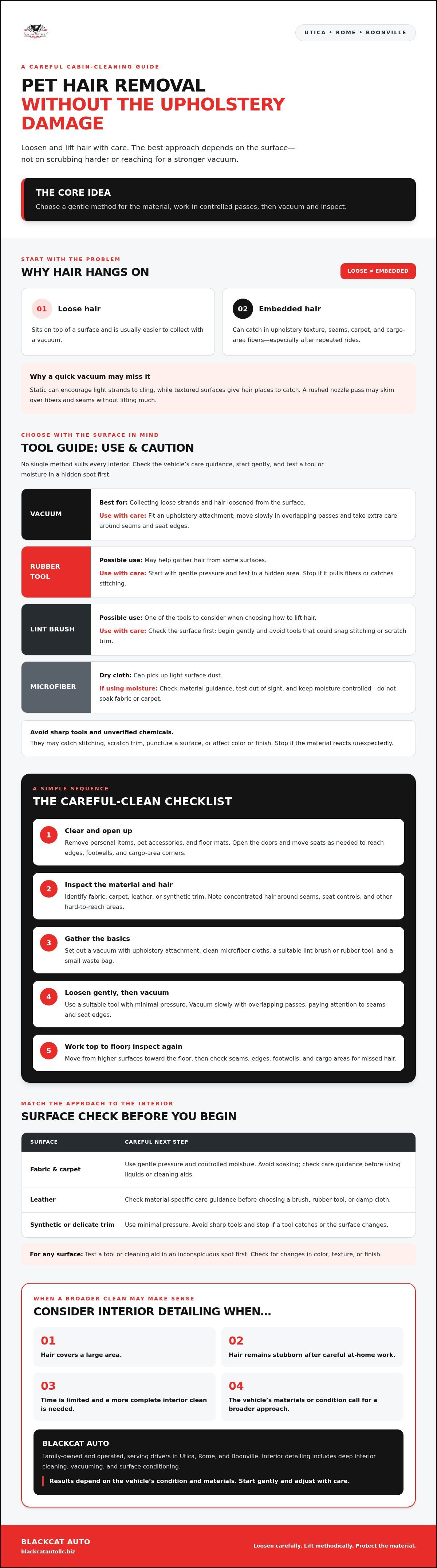
Follow This Step-by-Step Pet-Hair Removal Checklist
Work in a set order so loosened hair doesn’t settle back onto areas you’ve already cleaned. A cautious sequence is to clear the cabin, test a gentle hair-lifting method, vacuum from higher surfaces down, then inspect and repeat only where the material allows.
The cleaning sequence, from seats to floor mats
- Clear and divide the cabin. Remove loose items and, if practical, take out the floor mats. Treat the seats, each footwell, mats, and cargo area as separate zones so you can focus on one surface at a time.
- Start with the higher surfaces. Check seat backs, headrests, and seat fronts before moving to lower cushions and seat edges. Use a gentle, spot-tested tool suited to the material to lift visible, embedded hair. Work in short strokes and gather the loosened hair instead of brushing it across the cabin.
- Vacuum each seat zone. Use an upholstery attachment and slow, overlapping passes. Guide it around seams and edges without forcing it into gaps or pulling at stitching. If hair resists, pause rather than increasing pressure.
- Clean the mats separately. Follow the care guidance for each mat’s material. Lift hair gently, then vacuum both sides if appropriate before setting the mats aside.
- Finish at the floor and cargo area. Once higher surfaces are done, vacuum the footwells, carpet, and cargo space. Hair dislodged from seats can then be collected from below.
How to check your work without over-cleaning
Use good lighting to inspect seat seams, cushion edges, spaces beside seat controls, footwells, and the cargo area. If you find a small patch of remaining hair, repeat only the gentle method that suits that surface and passed your hidden-area test. Avoid soaking upholstery, and stop if fabric begins to look worn or if color, texture, or finish changes.
Some strands may remain caught in tight seams or deeply embedded fibers after a careful pass. Reassess the material and amount of hair rather than continuing to scrub. Persistent hair across multiple areas may call for a broader interior clean. Results depend on the vehicle’s condition and materials.
BLACKCAT AUTO’s interior detailing service includes deep interior cleaning and vacuuming, which may be useful if you’d prefer help with a broader cabin clean.
When to Consider Professional Interior Detailing in Utica
A careful at-home cleanup is a sensible first step, but it may not be enough if hair remains trapped in upholstery or spread throughout the cabin. A large area of affected fabric, several seats covered in fur, or hair embedded in carpet and cargo surfaces can make the task difficult with household tools. Limited time is another practical reason to ask about interior detailing, especially after repeated trips with a pet.
Choosing a professional service doesn’t mean expecting every strand to disappear. Results depend on the amount of hair, the vehicle’s materials, and its overall condition. A method suitable for carpet may not be appropriate for leather or delicate trim, so discuss those surfaces before arranging work.
Signs a professional interior clean may be useful
- Hair remains embedded after you’ve tried gentle, material-safe methods.
- Fur is spread across several seats, floor areas, and the cargo space rather than limited to one spot.
- You’d prefer to have the broader cabin cleaned instead of repeating a time-consuming task.
Before booking, ask what the interior detailing service includes and whether pet hair and the affected surfaces can be addressed. Describe the interior materials and where the hair is concentrated. Clear details help set reasonable expectations and clarify what’s suitable for your vehicle.
What to ask a local detailer before booking
Ask whether pet hair removal is part of the service or requires a separate arrangement, and which surfaces the service can treat. Mention whether the hair is on fabric seats, carpet, leather, or cargo-area material, and explain how extensive the buildup is. Also confirm current service availability and the booking process before making plans.
BLACKCAT AUTO is family-owned and operated and offers interior detailing for drivers in Utica, Rome, and Boonville. The service includes deep cleaning, vacuuming, and surface conditioning. It may be an option for persistent hair or a broader cabin clean, but specific pet-hair tools or results aren’t guaranteed. For pet hair removal car Utica options, describe the vehicle’s condition and materials so you can discuss what may be appropriate.
If you’re continuing the job yourself, keep up with small, gentle cleanups between pet trips and reassess the surface before trying a new tool. That steady approach can help keep the cabin manageable without overworking its materials.
Keep Your Car Comfortable for the Next Ride
Pet hair is easier to manage when you match your cleaning method to the surface and avoid forcing a tool where it doesn’t belong. A steady routine can help keep loose hair under control, while persistent buildup across seats, carpet, or the cargo area may call for a broader interior clean.
For local pet hair removal car Utica support, BLACKCAT AUTO offers interior detailing that includes deep interior cleaning and vacuuming. The appropriate approach, and the results you can expect, depend on your vehicle’s materials and condition. Describe the affected areas and ask what the service includes.
Whether you handle small cleanups yourself or seek help with a more persistent mess, a little care can make the cabin more comfortable for you and your pet on the next trip.
Frequently Asked Questions
How do you remove pet hair from car upholstery?
Start by identifying the upholstery material, then use a vacuum attachment to collect loose hair. For fabric seats, a gentle rubber tool or lint brush may help gather strands caught in the weave. Work over a small area with short strokes, collect the loosened hair, and vacuum again. Test tools discreetly first, and avoid using fabric-focused methods on leather or delicate trim.
What is the easiest way to get dog hair out of car carpet?
Vacuuming is a useful first step for loose hair and debris. If strands remain caught in the carpet, try a suitable rubber tool with light pressure and short strokes, then collect the lifted hair and vacuum again. Remove floor mats first when practical and check their care guidance. Don’t keep scrubbing if carpet fibers pull, change appearance, or resist a gentle pass.
Can you use a rubber glove to remove pet hair from a car?
A rubber glove may help gather hair from some fabric surfaces, but test it on a hidden spot before using it more broadly. Move your gloved hand gently over a small area so hair collects rather than gets pushed deeper into the weave. Avoid forceful rubbing, and don’t use this method on leather or sensitive trim unless the vehicle’s care guidance confirms it’s suitable.
How do you remove pet hair from leather car seats?
Use a soft, clean cloth or an appropriate vacuum attachment to lift loose hair without scratching the seat. Avoid abrasive brushes, sharp tools, and methods intended for fabric, which may affect the leather’s finish. Check the vehicle’s care instructions before applying moisture or cleaning products, and test any permitted method in an inconspicuous area. Stop if the surface’s color, texture, or finish changes.
Does a regular vacuum remove pet hair from a car?
A regular vacuum can collect loose hair, especially with an upholstery attachment, but it may leave strands caught in fabric fibers, seams, or carpet. Move the nozzle slowly with overlapping passes instead of sweeping quickly over the surface. If hair remains, use a gentle, material-compatible method to loosen it, then vacuum again. Be careful around stitching and narrow gaps so the attachment doesn’t catch.
When should I get professional car interior detailing in Utica?
Consider asking about detailing if hair remains after careful home cleaning, covers several areas, or the cleanup feels too time-consuming. If you’re researching pet hair removal car Utica options, ask whether pet hair and your specific surfaces can be addressed. Don’t assume a particular result. BLACKCAT AUTO offers interior detailing that includes deep cleaning and vacuuming for drivers in Utica, Rome, and Boonville.
How can I keep pet hair from building up in my car?
Use a washable seat cover that’s suitable for your vehicle and pet, and follow its care instructions. After trips, remove loose hair from the cover or seats before it gets pressed into the fabric. Keep the cargo area and floor mats clear of pet gear and debris, and vacuum regularly using an attachment suited to the surface. Small, gentle cleanups can make larger jobs less demanding.
For help with a broader cabin clean, contact BLACKCAT AUTO about interior detailing for your vehicle in Utica, Rome, or Boonville.
